VoIP penetration testing
VoIP penetration testing. From a phantom extension to toll fraud.
SIP REGISTER hijacking, RTP eavesdropping, SDP injection, IAX2 brute force, voice-VLAN hopping, Asterisk AMI exposure, and PSTN-trunk toll fraud, tested by hand against your PBX, SBC, and signalling stack. Every finding lands with a recorded call, the replayed media, and the dialplan diff your engineers can ship.
Four planes
Signalling · Media · PBX · Edge, one method, four layers of the stack.
Proof of call
Every finding ships with a recorded call, replayed RTP, or a fraudulent toll-out.
Re-test included
We verify your fixes at no extra cost. One engagement, closed loop.
The window from vulnerability discovery to exploitation has gone from weeks to hours.
Trusted by security teams across Fintech, SaaS & Education, Enterprise & Telecom, Security & Critical Infrastructure




On record


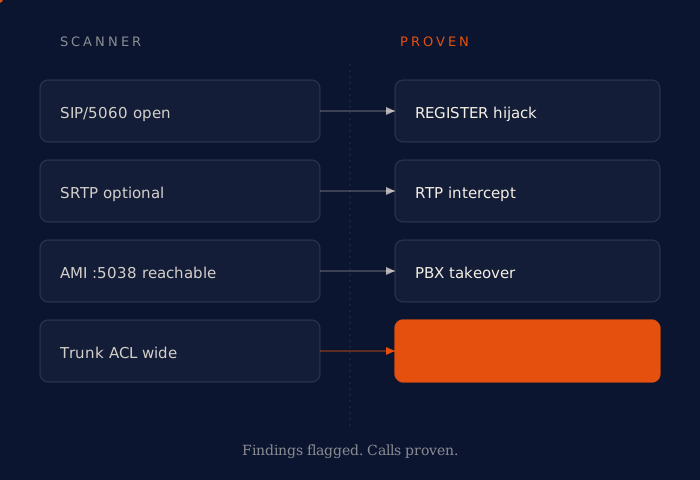
From port to toll fraud.
An open port is not a placed call.
SIP/5060 listening, AMI reachable, SRTP optional, those are just open doors. We walk through them: register a phantom extension, hijack the next inbound call, decode the RTP stream, and run a fraudulent toll-out across your PSTN trunk. Every finding ships with the recorded call, the replayed media, and the dialplan or SBC diff your team can deploy.
What we test ,
Four planes of the call. One engagement.
Each layer gets a manual, threat-modelled review against its real attack surface, signalling, media, infrastructure, and the trunk edge. Intensity tunes per scope.
Signalling, SIP / SDP
REGISTER hijacking, INVITE flooding, BYE/CANCEL race conditions, SDP rewriting, ALG bypass, digest-auth replay, contact-header rewrite, and presence-leak via SUBSCRIBE/NOTIFY.
Media, RTP / SRTP
RTP eavesdropping, ZRTP/SRTP downgrade, DTMF injection, codec confusion, replay across the media stream, comfort-noise abuse, and media-relay bypass.
Infrastructure, PBX core
Asterisk AMI/CLI exposure, FreeSWITCH event-socket misconfiguration, Cisco CUCM AXL credential leak, dialplan logic abuse, voicemail PIN brute force, IVR fingerprinting and option escape.
Edge, SBC + SIP trunk
SBC peering misconfiguration, voice-VLAN hopping, SIP trunk toll fraud, IAX2 brute force, NAT/ALG traversal abuse, peer-spoofed call replays, and geo-routing rule override.
VOIP METHODOLOGY.
Eight phases. Dial plan to media stream.
Threat-modelled to your dial plan, trunk peering, and PBX topology. Not a template we run against every voice network.
Scope & threat-model
Inventory of extensions, trunks, codecs, voicemail, and IVR is agreed before any signalling is touched. In-scope numbers and call windows defined in writing.
Recon & enumeration
SIP scanning (svmap, svwar, svcrack), extension enumeration via REGISTER and INVITE responses, codec offer probing, ALG fingerprinting, IAX2 discovery, exposed AMI or HTTP admin.
Signalling exploitation
REGISTER hijacking, contact-header rewrite, BYE or CANCEL race, INVITE replay across digest auth, SDP rewriting, dialog-ID prediction, ALG bypass. Exercised to call control.
Media exploitation
RTP capture and decode, SRTP or ZRTP downgrade where the offer permits, DTMF injection, codec mismatch leading to garbled-then-replayed audio, comfort-noise abuse.
Infrastructure exploitation
Asterisk AMI privilege escalation, FreeSWITCH event-socket abuse, CUCM AXL credential reuse, dialplan injection, voicemail PIN brute force, IVR option escape.
Toll-fraud & trunk abuse
Outbound toll fraud across the PSTN trunk, premium-rate dialing, peer-spoofed call replays, geo-routing override. Measured to a billed call.
Remediation guidance
Asterisk pjsip.conf snippets, CUCM partition diffs, SBC ACLs, dialplan rewrites, ZRTP-mandatory configurations, AMI or HTTP admin lockdown. Written for voice engineers, not auditors.
Patch verification
Every finding re-tested after your team ships the fix, at no extra cost. Written confirmation each call path is closed.
Insights
VoIP security Resources.
SIP/RTP write-ups: registration hijack, billing fraud paths, and the VoIP-side bugs we find in carrier and enterprise PBX gear.

Meet our expert
One lead across signaling and media planes.
John Dill
vCISO at SecureLayer7
15+
Years in offensive security
150+
Engagements led to date
99.99%
On-time engagement delivery
John scopes VoIP and telecom engagements against your dial plan, trunk peering, and PBX topology. He guides the pod from kick-off through final report and re-test.
- Scopes Asterisk, FreeSWITCH, CUCM, and SBC engagements against your real call paths.
- Owns kick-off, mid-engagement check-ins, and live walkthrough of every recorded call.
- Drives remediation review and re-test until every signalling and media finding is closed.

Ready to scope a VoIP pentest? Book 30 minutes with John to walk through your dial plan, trunk peering, and timeline.
Book a 30-min callTested by industry.
The bug classes named below come from real engagements in each sector. Pick the closest fit.



FinTech
Banking IVR, fraud-team voice infrastructure, recording-and-retention chains.
Built for India engagements
What changes when we deliver here.
Compliance scoping
Packet-captured proof of toll-fraud or eavesdropping path
Regulatory framework
TRAI UCC and DoT OSP clauses cited per finding
Local engagements
Indian contact-centre and BPO VoIP audits
Local pricing
INR per-trunk pricing with GST
Compliance scoping
DPDP Section 8 voice-data encryption review
VoIP security questions Indian contact-centres ask.
Toll-fraud paths tested?
Yes. INVITE replay, REGISTER hijack and SBC bypass attempted. The report shows the captured packet and the DoT OSP clause violated.
Are RTP streams checked for eavesdropping?
Yes. SRTP key reuse, ZRTP downgrade and unencrypted RTP paths reviewed. Each finding cites the DPDP Section 8 control.
TRAI UCC and DLT scrubbing relevant?
Yes for outbound voice — header and content checks reviewed against TRAI UCC rules. Findings cite the TRAI 2018 regulation by section.
WebRTC clients in scope?
Yes. STUN, TURN, ICE and DTLS-SRTP reviewed. Browser-side leaks and IP-disclosure paths flagged.
Delivery in India
SIP and SBC review. TRAI UCC-aware.
SIP, RTP, WebRTC and SBC paths tested for toll fraud and eavesdropping. TRAI UCC rules and DoT OSP licence conditions noted per finding.
- Direct line
- +91-20-71600505
- Office
- Pune, Maharashtra, India
Frameworks scoped: CERT-In · DPDP Act · RBI CSF · SEBI CSCRF · ISO/IEC 27001 · PCI DSS.
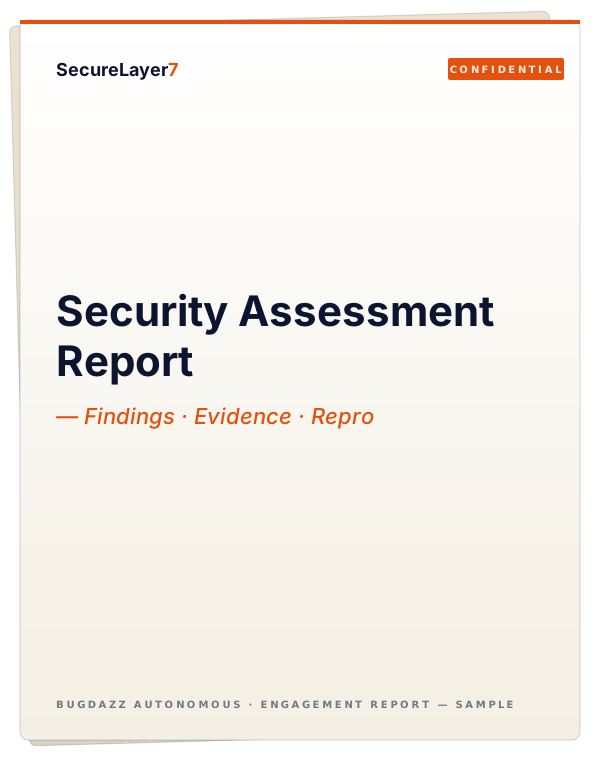
Sample engagement report
See what arrives in your inbox.
A pre-vetted sample report: full vulnerability narrative, working proof-of-call, code-level fix guidance for voice engineers. Sent on request after a 5-minute scoping call.