OT security testingthat walks the protocols, not the perimeter.
Plant-safe pentests for ICS, SCADA, PLCs, and HMIs. Modbus, DNP3, OPC UA, and S7Comm read by hand. Report mapped to IEC 62443 and NIST 800-82.
Plant-safe
Read-only baseline first. Write-tests behind your change control. No PLC writes without sign-off.
Protocol-native
Modbus, DNP3, OPC UA, S7Comm, IEC 60870-5-104, IEC 61850, EtherNet/IP, PROFINET (walked by hand, not by signature).
Re-test included
Same researcher, same chain. PLC firmware patch, segmentation fix, or HMI hardening verified on the line.
One engineering host with a flat AD trust on the IT side, one Modbus write-coil, one shift lost on the line.
Trusted by security teams across Fintech, SaaS & Education, Enterprise & Telecom, Security & Critical Infrastructure




On record



Protocol-native.
We speak the plant's protocols, down to the function code.
OT risk lives in the protocol, not the port. Modbus function-code 06 accepting unauthenticated register writes, DNP3 unsolicited responses spoofed across the bus, OPC UA handshakes abused by hand, we test those safely on your plant and show you exactly what moves.
What lands in scope.
Counted, not claimed.
Modbus TCP/RTU, DNP3, OPC UA, EtherNet/IP (CIP), PROFINET, S7Comm, IEC 60870-5-104, IEC 61850. Walked by hand, not by signature.
From sensors and actuators (level 0) through process control (level 2), site operations (level 3), corporate IT (level 4), and the boundary firewall (level 5).
Siemens S7 (300/400/1200/1500), Rockwell Allen-Bradley (CompactLogix, ControlLogix), Schneider Modicon, Mitsubishi MELSEC, ABB AC500.
Same researcher, same chain. PLC patch, segmentation change, or HMI hardening verified on the live line.
RECON TO PURDUE.
What a bench operator finds on a plant that an IT scanner cannot see.
- 01Passive recon on the bus
Tap the network at the cell switch. Read Modbus, DNP3, and S7Comm traffic for asset inventory, function-code patterns, and master/slave relationships before sending a single packet.
- 02PLC enumeration
Identify PLC vendor, firmware build, slot configuration, and protection level over S7Comm, CIP, or Modbus. Pull ladder logic and tag tables where the PLC permits unauthenticated reads.
- 03HMI and SCADA chain
Walk Wonderware, GE iFix, Ignition, or FactoryTalk View for default credentials, weak project-file ACLs, and SCADA tag writes that bypass the operator console.
- 04Engineering workstation pivot
Test the Windows 7 or stale Windows 10 engineering hosts that sit dual-homed in zone 2 and zone 4. Recover project files, signing keys, and stored RDP credentials to the next zone.
- 05Purdue boundary crossing
Walk the jump host or VPN appliance bridging IT (zone 4) into OT (zone 3). Test for split-tunnel, weak MFA, and stale firewall rules that let an IT-side compromise reach the line.
OT methodology.
Eight phases. Boundary to bus.
Threat-modelled to your plant. Not a checklist.
- 01Scope & threat-model
- 02Passive surface recon
- 03Boundary walk
- 04Protocol attack surface
- 05PLC and engineering workstation
- 06HMI and SCADA chain
- 07Exploit synthesis
- 08Patch verification
Insights
OT & plant Resources.
Real OT engagement notes from the operators who ran them.
Meet your expert
John Dill
vCISO at SecureLayer7
Plant-led
OT engagement model
Modbus to MES
In scope by default
IEC 62443
Report-mapped
John scopes OT engagements against your PLC vendor mix, SCADA platform, and Purdue-zone layout. Runs kick-off, change-control review, and sign-off.
- Scopes engagements across manufacturing, energy, utilities, oil and gas (API 1164), and water (TSA Pipeline) against your real safety model.
- Owns kick-off, maintenance-window planning, and live review of every protocol, PLC, HMI, and boundary finding.
- Drives remediation review and re-test until every chain is closed and the patch is verified on the live line.

Ready to scope an OT pentest? Book 30 minutes with John to walk through your plant, PLC vendor mix, SCADA platform, and maintenance window.
Book a 30-min callCommon procurement questions
What buyers askbefore signing an OT pentest SOW.
Have a procurement question not listed here?
Tested by industry.
The bug classes named below come from real engagements in each sector. Pick the closest fit.

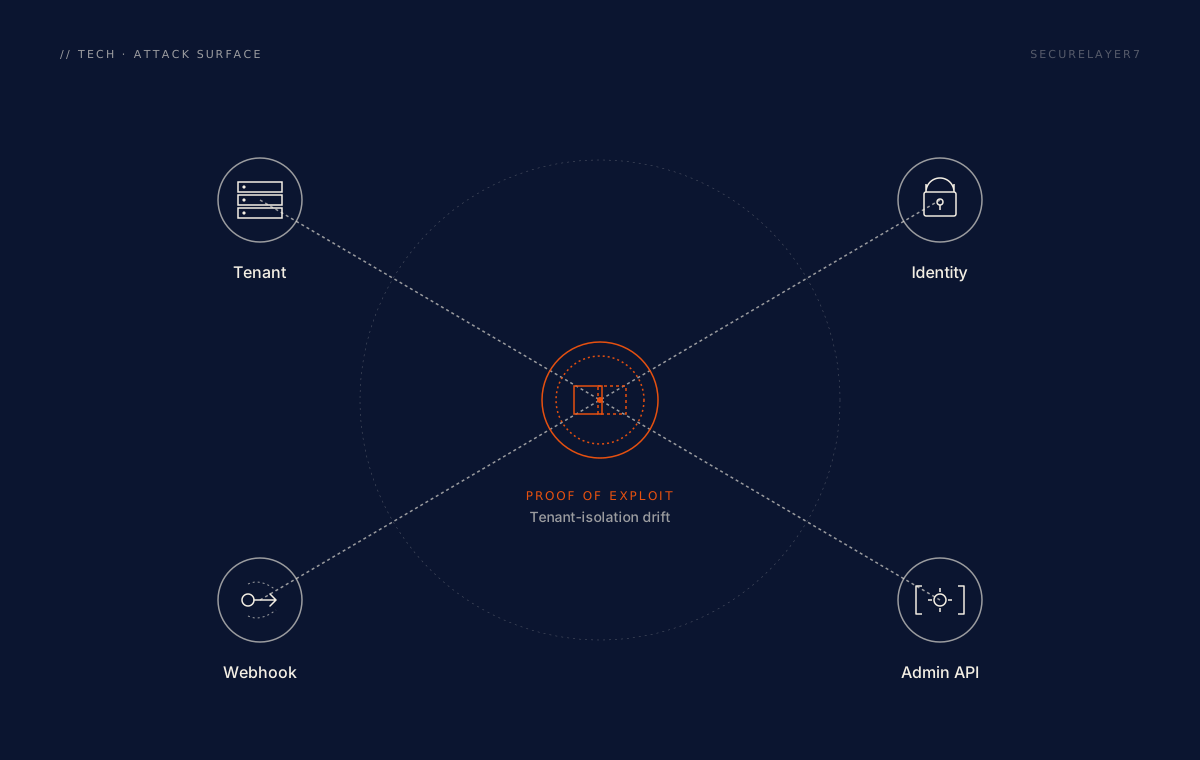
Tech (industrial SaaS / IIoT)
IIoT platforms, fleet-control APIs, OTA chains into plant gateways, edge controllers.

Retail (logistics / supply chain)
Warehouse robotics, edge IoT controllers, Modbus-speaking conveyor PLCs, distribution-centre HMIs.
Energy & utilities
Substation IEC 61850, DNP3 outstations, NERC CIP scope, TSA Pipeline pipeline SCADA.
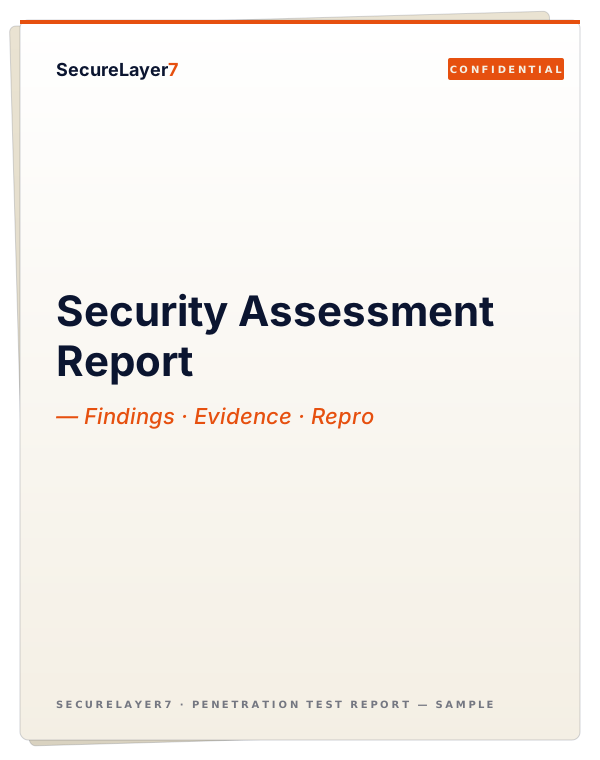
Sample OT engagement report
See what arrives in your inbox.
A redacted sample OT pentest report: protocol-walk narrative, recorded proof-of-exploit on the bus, patch path, and re-test note.