Source Code Audit and ReviewFollow untrusted data to the sink.
We review JVM, Go, Python, Node, Rust, C/C++, PHP, and Ruby the way code actually ships: every sink traced by hand to a tainted source through the call graph, with findings mapped to the SOC 2 and PCI DSS controls your US auditors check.

Coverage
The full polyglot surface your teams maintain: JVM, Go, Python, Node, Rust, native code, PHP, Ruby. Reviewers spend time where ownership is fuzzy or risky.
Evidence
Working exploits plus patch-ready diffs. Nothing closes until engineers see reproducible impact tied to real branches.
Re-test included
Fix lands in your repo, we re-run the chain inside the same engagement. No surprise invoices for verification.
Templated audits miss the chained logic flaw that costs $40M when it breaks.
Trusted by security teams across Fintech, SaaS & Education, Enterprise & Telecom, Security & Critical Infrastructure




on record ,
Accredited testers, audited handling.
CREST accredits our organisation and every tester on your engagement. CERT-In empanelment plus SOC 2 Type II and ISO/IEC 27001 controls govern how source artefacts, secrets, and engagement records are stored, accessed, and handed back.




Mapped to audit requirements across
- SOC 2 Type II
- ISO/IEC 27001
- PCI DSS
- HIPAA
- GDPR
- NIST CSF
- FedRAMP
- and others
Accreditations

Follow the taint.
A 10k-finding backlog isn't a proven path.
What matters isn't the count of findings, it's whether untrusted data can still reach the sink. Follow one real chain: req.body.sort rides through ajv, slips into the ORM's raw() escape hatch, then reappears in ORDER BY ${col}. Three files, two reviewer passes, one tainted path a linter waved through. You get the narrative from scoping to retest (source, every hop, sink), plus exploit proof, the patch engineers can merge, and a re-test that survives scrutiny.

PAST STATIC SCANNERS.
The bug classes that pre-date the build and survive every scanner.
- 01Deserialization sink
Java readObject, Python pickle.loads, .NET BinaryFormatter on attacker-controlled input. RCE primitives the scanner never traces.
- 02TOCTOU race
Access check separated from the use, file open, signed-URL validation, payment-state read. Concurrent requests win the window.
- 03Integer overflow
Unchecked arithmetic on Go uintptr or C size_t, allocation under-counts, heap layout exploit follows.
- 04String-concat SQL
Parameterized everywhere except one logging path or one admin filter. The grep is fast, the auditor reads the call graph.
- 05Command injection path
exec.Command with a shell wrapper, child_process.exec instead of execFile, user input flows through env var into a sub-process.
- 06Secrets in history
Rotated key still in git log, .env committed to a feature branch, dependency lockfile pinned to a private registry token.
- 07Cryptographic misuse
ECB mode, static IV, MD5 for password hashing, HMAC compared with non-constant-time equality. Reads as working code, fails at audit.
Scope ,
Seven stacks. Same depth on each.
Auditors who still ship production code in these stacks review yours by hand. We throttle depth based on trust boundaries and data sensitivity, with authentication surfaces, deserialisation paths, parsers, query builders, and IPC earning mandatory deep dives every time.
JVM, Java · Kotlin · Scala
Jackson polymorphic-typing gadgets (CVE-2017-7525 lineage), Spring SpEL / EL injection, JNDI / Log4Shell-style lookups, JDBC string concatenation, lock-order races on shared state, Servlet filter-bypass chains.
Go
Data races on shared maps and channels, `unsafe.Pointer` arithmetic across cgo bridges, raw-string SQL in `database/sql`, JWT `alg=none` acceptance, `text/template` over `html/template`, dependency-confusion in `go.mod` proxies.
Python
`pickle.loads` on user input, SSTI in Jinja / Mako templates, `eval` / `exec` reachable from request handlers, f-string SQL interpolation, `yaml.load` without `SafeLoader`, `subprocess(shell=True)` argument injection, path traversal via `os.path.join`.
Node · TypeScript
Prototype pollution through `lodash.merge` / `Object.assign`, ReDoS via catastrophic backtracking on user-controlled patterns, `child_process.exec` argument injection, JWT `alg` confusion, sandbox escape in `vm` / `node-serialize` patterns.
C · C++ · Rust unsafe
Buffer overflows, format-string bugs, use-after-free, double-free, OOB reads, integer / sign-conversion overflow in parsers and codecs · Rust `unsafe` audited for aliasing and invariant breaks across FFI boundaries.
PHP
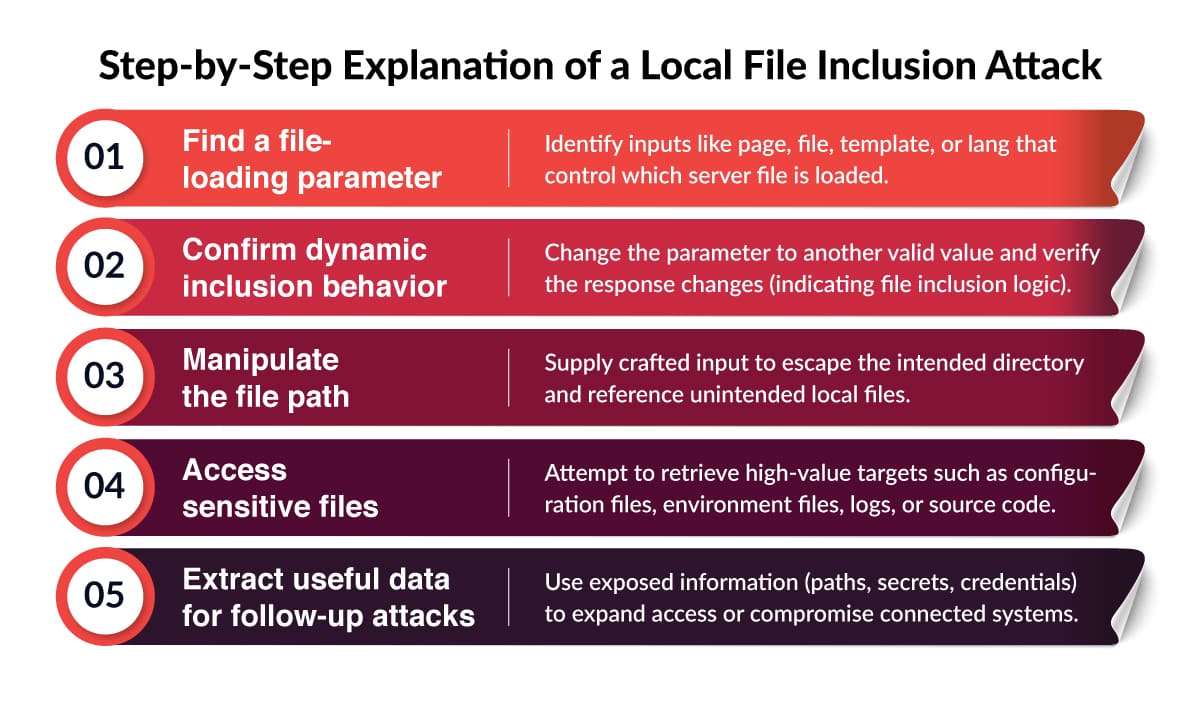
LFI / RFI through `include` paths, object injection via `unserialize`, PHAR deserialisation gadgets, type-juggling (`==`) auth bypass, raw-SQL in legacy modules, `extract()` variable overwrites in framework caches.
Ruby · Rails
Mass assignment through `permit` gaps, `YAML.load` on user input, dynamic dispatch via `send` / `public_send`, raw-SQL in scope chains and `find_by_sql`, `Marshal.load` in cache stores, `constantize` on user input.
SOURCE CODE METHODOLOGY.
Eight phases. From clone to verified patch.
Sized to your repository topology, dependency graph, and code-ownership seams. Nothing is copy-pasted from a generic checklist, and no phase closes until engineers land fixes that survive a second review pass.
Scope & threat-model
Repositories, language mix, framework versions, ownership boundaries, and abuse cases captured in writing before the first clone.
Source recon
Dependency graph, transitive supply chain, externally reachable entry points, IPC seams, and build-pipeline choke points mapped for humans, not dashboards.
SAST triage
Scanner output becomes a ranked hypothesis list. Nothing auto-ships as a finding until a researcher validates exploitability.
Manual audit
Line-level passes on authentication, deserialisation, ORMs, parsers, IPC, filesystem touchpoints, and crypto helpers your threat model highlights.
Taint & data-flow tracing
Walk every sink backwards through validators, sanitisers, schema layers, and framework magic so partial mitigations cannot hide residual risk.
Exploit synthesis
Pair each accepted issue with a working PoC and business-weighted severity so patch order follows impact, not meeting theatre.
Remediation guidance
Concrete diffs, dependency bumps, config toggles, and safer framework patterns aimed at the engineer listed in CODEOWNERS.
Patch verification
Re-run exploits against the merged fix branch with written sign-off per closed path. Auditors see verified closure, not ticket churn.
Insights
Source code audit From the lab.
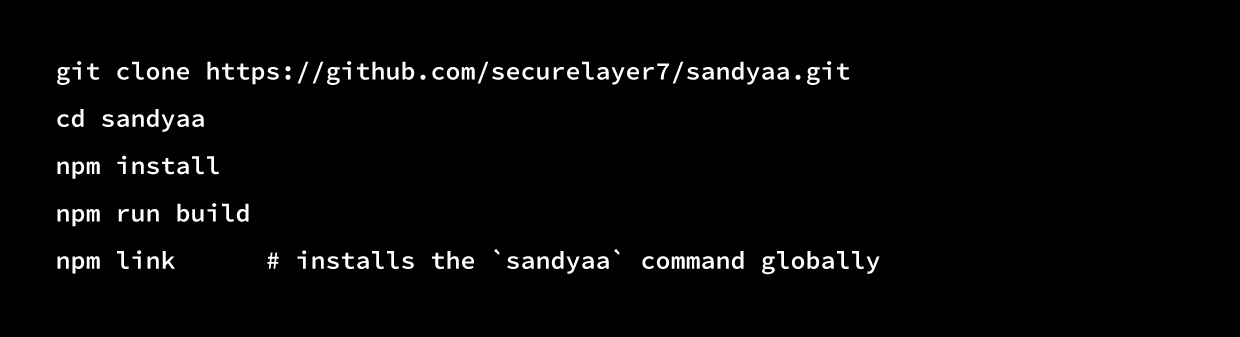
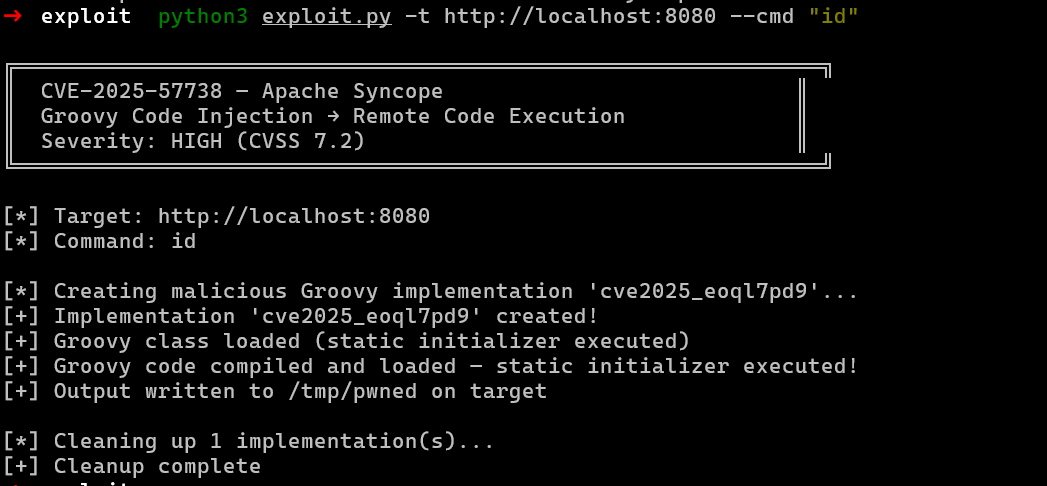
Same operators publishing tooling drops, CVE write-ups, and exploit teasers that mirror how they review customer code.
Meet our engagement lead
Engagement lead. John Dill.
John Dill
vCISO at SecureLayer7
300+
Audits scoped
10+
Years in code-level AppSec
98%
Findings closed on re-test
John owns the scoping conversations engineering leads keep on the calendar: repo topology, language mix, sensitive flows. He tells you where reviewers will spend weeks versus days, then stays accountable through remediation workshops so auditors talk to facts, not slide decks.
- Maps reviews to business-critical modules across JVM, Go, Python, Node, PHP, and adjacent stacks.
- Facilitates kick-off, mid-engagement risk reviews, and live exploit demos alongside your leads.
- Tracks remediation and signs off on fixes only after a second technical pass.

Bring repos, dependency manifests, and your latest pentest summary. Thirty minutes with John locks languages, trust boundaries, and calendar realities.
Book a 30-min callTested by industry.
The bug classes named below come from real engagements in each sector. Pick the closest fit.

Tech SaaS
Multi-tenant codebases, isolation invariants, secret-handling code paths.

FinTech
Trading-engine, settlement-engine, custody-vault code reviewed for invariants.

Sample engagement report
Preview the deliverable before you brief leadership.
Redacted excerpts include chain narrative, working exploit artefacts, line-level patch guidance, and re-test attestation from a recent engagement. After a 5-minute scoping sync we align examples with your languages so reviewers recognise their own patterns.