An autonomous pentestthat gets in before attackers.
SecureLayer7's autonomous pentesting platform, BugDazz, finds the path, proves the exploit, verifies the fix.
Trusted by security teams across Fintech, SaaS & Education, Enterprise & Telecom, Security & Critical Infrastructure




Independently audited
Backed by the credentials your customers already require.
Every Autonomous engagement is delivered under the same accreditations SecureLayer7 carries across PTaaS and API Scanner.
 CRESTAccredited company & testers
 SOC 2 Type IIIndependently audited
 ISO/IEC 27001Information Security Management
What Autonomous is
Pick a surface.Autonomous runs the attack.
One surface per engagement. Pick the assessment, point it at your app, authenticate, the engine runs the rest.
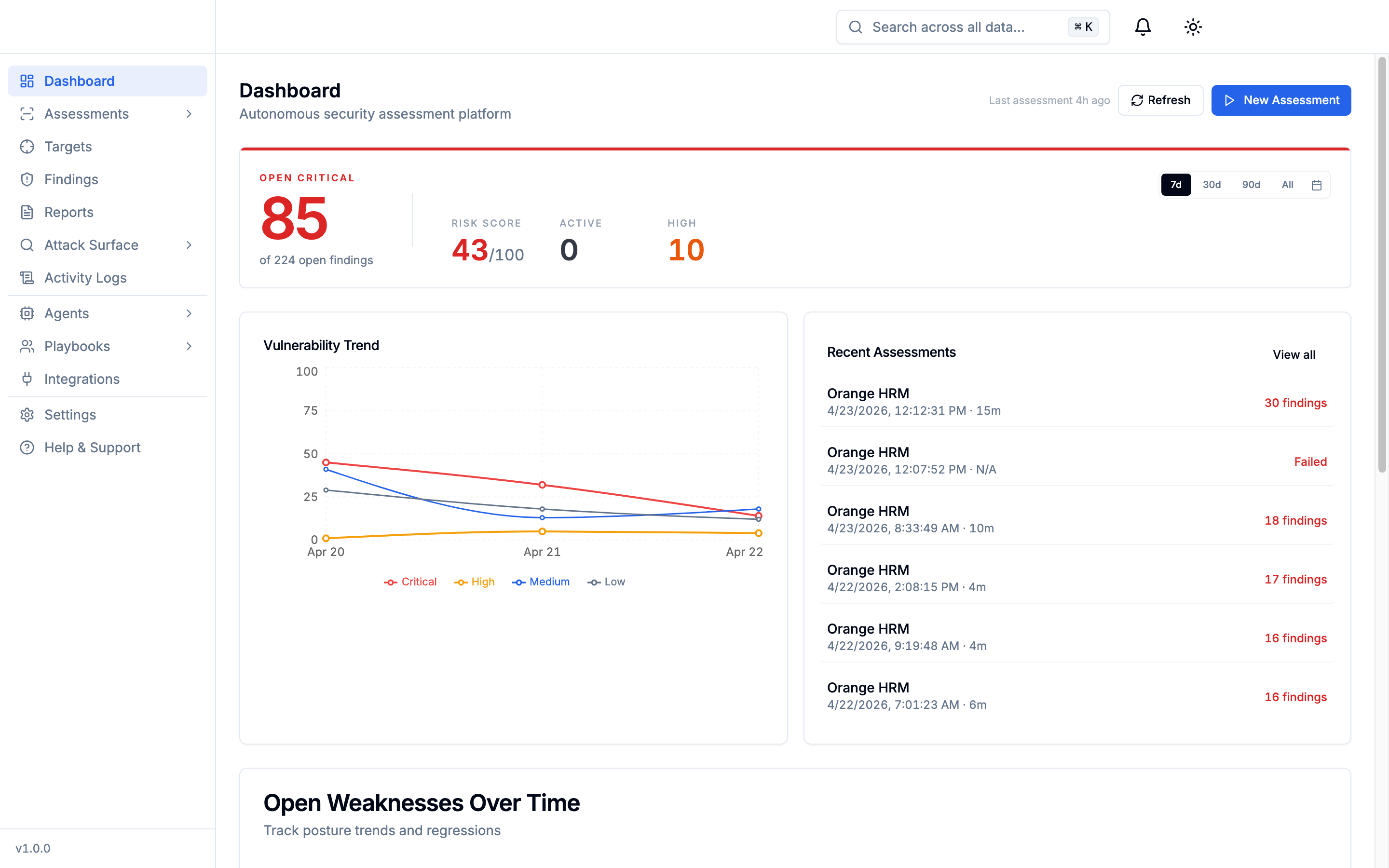
Every finding ships with the exploit that proved it. Rabit0, SL7's validation gateway, rejects what can't be reproduced.
- Web / APIWeb apps and REST / GraphQL APIs
- Active DirectoryAD enumeration, credential attacks, lateral movement
Full URL including https://
Engagement velocity
From signed PO to first exploit. Ten minutes.
Measured per engagement · from PO countersign
No scoping call. No Gantt chart. No four-week kickoff. Exploits land first.
What arrives
Not a flag. Not a score. A proven exploit.
Every finding arrives with the request that reproduced it, the impact it landed, the fix that closes it, and a re-verification hook that runs the moment you ship the patch.
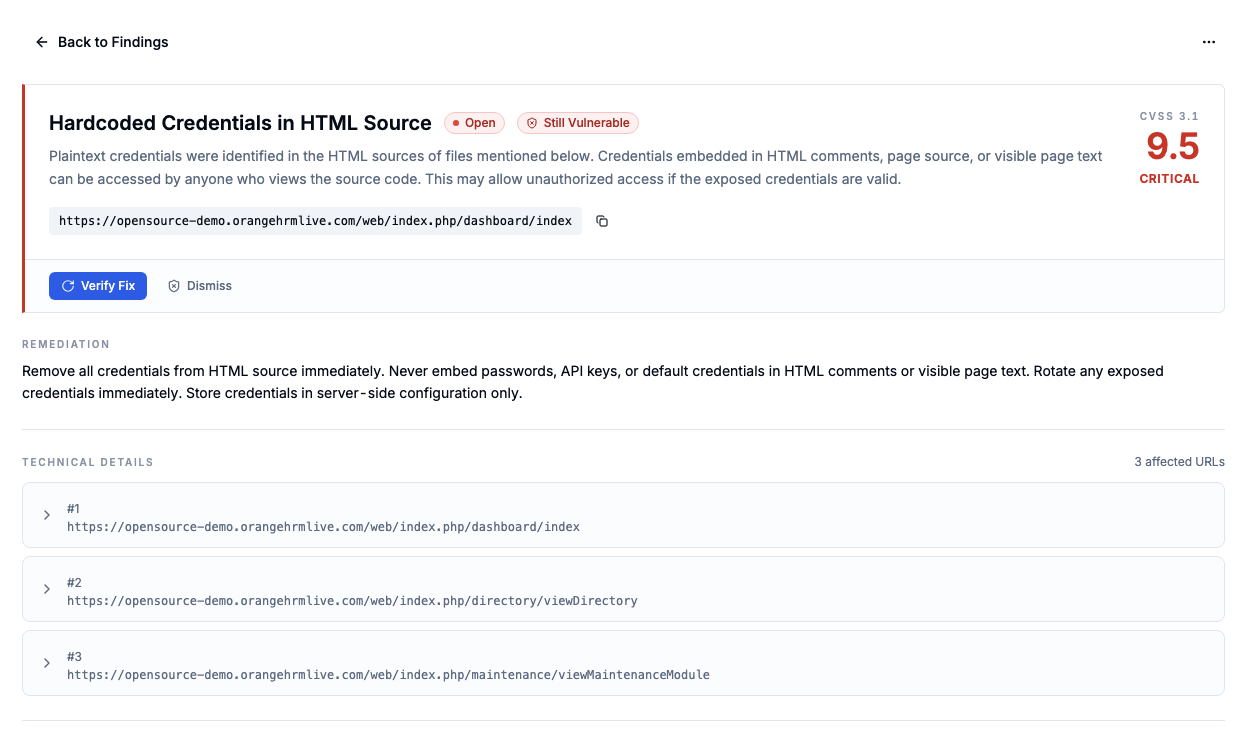
- Request / response trace
- CVSS vector + impact
- PoC script
- Fix diff
- Auto re-verify on patch
- ScopeYour surface only, path excludes, rate limits, windows
- Payload corpusSafe by default, destructive payloads gated on explicit consent
- Data residencyTarget traffic stays in your perimeter
- ValidationRabit0 consensus rejects bait paths and hallucinations before any finding ships
- JIRA
- Slack
- ServiceNow
- GitHub Actions
- Webhook
Benchmarked against
The industry average. The Rabit0 difference.
Industry baselines below: annual cadence, weeks of reporting, fix rates under thirty percent. Autonomous moves each by an order of magnitude.
Numbers measured across delivered engagements · methodology on technical review
Runs across Web, API, and AD, on every CI/CD push, scheduled window, or on-demand.
From signed PO to first exploit, same session. No scoping call. No kickoff.
Developers fix what they can reproduce. Each finding ships with a working exploit, the “is this real?” argument ends there.
$4K per surface, on-demand, CREST-backed. Enterprise tiers for fleet-wide coverage.
Rabit0: Validation engine
Trained on disclosed CVEs. Not on lab signatures.
SL7’s validation engine. Trained on years of SL7 Lab’s published CVE research.
- Public CVE research
Years of SL7 Lab's own disclosures feed the validation library.
- Deception-aware
Filters bait paths, planted CVEs, and hallucinated assets before any finding ships.
- Reproduction-gated
What lands in your report ran in your environment first. No lab replicas.
SL7 Lab
Disclosed in production. Verifiable on NVD.
Vulnerabilities found, disclosed, and fixed in production software. Linked to the source on each row.
Rabit0 finds the n8n RCE
Remote Code Execution via JavaScript destructuring · CVSS 9.4
Read disclosure- 9.4CVE-2026-25049Remote Code Execution via JavaScript destructuring
n8n: workflow automation platform
Discovered by SL7 Lab
- 8.6CVE-2026-22729JSONPath injection in Spring AI PgVectorStore
Spring AI: zero-day at disclosure
Discovered by SL7 Lab
- 8.8CVE-2026-22730SQL injection in Spring AI MariaDB Vector Store
Spring AI: zero-day at disclosure
Discovered by SL7 Lab
- EmbargoedCVE-████-█████Unauthenticated Remote Code Execution in Apache ███████
Apache Software Foundation: under coordinated disclosure
Discovered by SL7 Lab · vendor notified, embargoed
- EmbargoedCVE-████-█████Path traversal in Apache ███████
Apache Software Foundation: under coordinated disclosure
Discovered by SL7 Lab · vendor notified, embargoed
From the field

“Honestly didn't expect a working exploit on something our quarterly had already cleared. Not the usual outcome.”
Vikramjeet Singh · Information Security · formerly at Ericsson
Learn
New to the category? Start with the plain-language explainer.
What autonomous penetration testing is, how it differs from a vulnerability scanner, where it does its best work, and where it still needs people. Read it before you scope a run.
Try it on your stack
Bring a surface from your stack. Get back a proven exploit.
Live engagement on a surface you choose. Architecture and methodology walked through on technical review.
For startups
Pre-Series A? Apply for the startup program.
BugDazz Autonomous is also the engine behind our startup program. A single Autonomous app pentest, CREST-aligned report, engagement-lead signoff, retest included, heavily discounted for pre-Series A startups closing enterprise customers or passing SOC 2.